Old-Fashioned Beef Stew
Few dinners feel as comforting as a big pot of Old-Fashioned Beef Stew slowly simmering on the stove.
Tender chunks of beef cook with potatoes, carrots, celery, onions, garlic, herbs, and a rich savory broth until the meat practically falls apart with a fork and the vegetables are perfectly tender.
It’s simple, hearty food made from everyday ingredients.
No complicated techniques. No fancy presentation required.
Just beef, vegetables, gravy, and enough time for everything to become deeply flavorful.
This is exactly the kind of dinner that works for cool fall evenings, Sunday supper, meal prep, or those busy weeks when you want one big pot that can feed the family and provide leftovers.
Why You’ll Love This Classic Beef Stew
Rich old-fashioned flavor. Beef, vegetables, herbs, and gravy come together into classic comfort food.
One-pot dinner. Protein, vegetables, and potatoes are all cooked together.
High in protein. Beef makes each bowl hearty and satisfying.
Budget-friendly. Chuck roast is ideal for slow cooking and can feed several people.
Excellent leftovers. Beef stew often tastes even better the next day.
Freezer-friendly. Make a large batch and save portions for later.
Perfect for fall and winter. Few meals are more comforting when the weather cools.
Food Network’s classic approach similarly uses beef chuck and emphasizes browning followed by low-and-slow cooking for tenderness and deeper flavor.
Ingredients
For the Beef
- 2½ pounds beef chuck roast, cut into 1½-inch cubes
- 1½ teaspoons salt
- ½ teaspoon black pepper
- ¼ cup all-purpose flour
- 2 tablespoons olive oil
Vegetables
- 1 large yellow onion, chopped
- 3 carrots, cut into chunks
- 3 celery stalks, sliced
- 1½ pounds Yukon Gold or red potatoes, cut into chunks
- 4 cloves garlic, minced
For the Stew
- 4 cups low-sodium beef broth
- 2 tablespoons tomato paste
- 1 tablespoon Worcestershire sauce
- 1 teaspoon dried thyme
- ½ teaspoon dried rosemary
- 2 bay leaves
- 1 teaspoon smoked paprika
- ½ teaspoon onion powder
- 1 cup frozen peas, optional
For Thickening, If Needed
- 2 tablespoons cornstarch
- 2 tablespoons cold water
What Is the Best Beef for Beef Stew?
For classic beef stew, beef chuck roast is my first choice.
Chuck contains connective tissue and enough fat to become tender and flavorful after long cooking.
That is why it appears so frequently in classic beef stew recipes from established cooking publications. Martha Stewart’s version uses beef chuck, while Food Network’s classic stew also starts with chuck roast.
Other options include:
- Stew meat
- Bottom round
- Boneless short ribs
- Beef shoulder
Pre-cut stew meat is convenient, but cutting a chuck roast yourself gives you more control over the size of the pieces.
How to Make Old-Fashioned Beef Stew
Step 1: Prepare the Beef
Pat the beef cubes dry with paper towels.
Season them with:
- Salt
- Black pepper
Sprinkle the flour over the beef and toss until lightly coated.
The flour helps the meat brown and also contributes to a thicker gravy later.
Step 2: Brown the Beef
Heat olive oil in a large Dutch oven over medium-high heat.
Add the beef in batches.
Do not overcrowd the pot.
Brown each batch for approximately 2–3 minutes per side.
Transfer browned beef to a plate.
This step creates the deep savory flavor that makes homemade beef stew taste much richer.
Food Network likewise highlights browning chuck roast in batches as one of the keys to developing flavor in classic beef stew.
Step 3: Cook the Onion and Celery
Reduce the heat to medium.
Add:
- Onion
- Celery
Cook for approximately 4–5 minutes, stirring occasionally.
Add the garlic and cook another 30 seconds.
If the bottom of the pot looks dry, add a small splash of broth.
Step 4: Cook the Tomato Paste
Add the tomato paste.
Stir it into the vegetables.
Cook for approximately 1–2 minutes.
Cooking tomato paste briefly helps deepen its flavor and adds richness to the gravy.
Step 5: Deglaze the Pot
Pour in approximately 1 cup beef broth.
Use a wooden spoon to scrape the browned bits from the bottom.
Those browned pieces contain a tremendous amount of flavor.
Then add the remaining broth.
Step 6: Add the Beef and Seasonings
Return the beef and any accumulated juices to the pot.
Add:
- Worcestershire sauce
- Thyme
- Rosemary
- Bay leaves
- Smoked paprika
- Onion powder
Bring the liquid to a gentle simmer.
Step 7: Simmer Low and Slow
Cover the pot.
Reduce the heat to low.
Simmer for approximately 1½ hours.
Stir occasionally.
You want gentle simmering rather than aggressive boiling.
Slow cooking gives the beef time to soften.
Step 8: Add Potatoes and Carrots
After approximately 1½ hours, add:
- Potatoes
- Carrots
Stir gently.
Cover again.
Continue cooking for another 40–50 minutes, or until:
- Beef is fork-tender
- Potatoes are soft
- Carrots are tender
Step 9: Add the Peas
During the final 5 minutes, stir in frozen peas if using.
They only need enough time to heat through.
Step 10: Thicken the Gravy if Needed
If you prefer a thicker beef stew, mix:
2 tablespoons cornstarch + 2 tablespoons cold water
until completely smooth.
Slowly stir the mixture into the simmering stew.
Cook for another 2–3 minutes.
The gravy will thicken quickly.
Step 11: Rest and Serve
Remove the bay leaves.
Taste and adjust:
- Salt
- Pepper
- Worcestershire sauce
Let the stew sit for about 10 minutes before serving.
This allows the gravy to settle and thicken slightly.
Serve hot with crusty bread or dinner rolls.
The Secret to Tender Beef Stew
The biggest mistake is trying to cook the beef too quickly.
Use the Right Cut
Lean steak cuts aren’t necessarily better.
Chuck becomes tender during slow, moist cooking.
Brown the Meat
Browning creates deeper flavor before the liquid is added.
Don’t Crowd the Pan
Crowding causes the beef to steam instead of brown.
Cook in batches.
Keep the Simmer Gentle
Hard boiling can make meat tougher.
Low and slow is better.
Give It Enough Time
If the beef is still chewy, don’t assume you’ve ruined it.
It often simply needs more cooking time.
Best Potatoes for Beef Stew
Yukon Gold Potatoes
My favorite.
They become creamy without falling apart too easily.
Red Potatoes
Another excellent choice because they hold their shape well.
Russet Potatoes
They work, but they’re starchier and may break down more during long cooking.
That can be useful if you want a naturally thicker stew.
Can I Use Stew Meat?
Yes.
Packaged beef stew meat is convenient and usually comes already cut into chunks.
However, the package can sometimes contain pieces from different cuts, which means some pieces may become tender faster than others.
For the most consistent result, buy a chuck roast and cut it yourself.
Old-Fashioned Beef Stew Without Wine
You do not need wine to make rich beef stew.
This recipe gets plenty of flavor from:
- Browned beef
- Beef broth
- Tomato paste
- Worcestershire sauce
- Garlic
- Herbs
If another recipe calls for red wine and you’d rather avoid it, simply replace it with additional beef broth.
Beef Stew With Red Wine
If you enjoy cooking with wine, replace approximately 1 cup of the beef broth with dry red wine.
After browning the beef and vegetables, add the wine and scrape the browned pieces from the bottom of the pot.
Simmer briefly before adding the remaining broth.
This creates a deeper, more complex sauce.
Slow Cooker Old-Fashioned Beef Stew
You can also make this in a slow cooker.
For the best flavor:
- Brown the beef on the stovetop.
- Cook onions briefly in the same skillet.
- Transfer everything to the slow cooker.
- Add broth, tomato paste, Worcestershire sauce, herbs, carrots, and potatoes.
- Cook on LOW for approximately 7–8 hours, until the beef is tender.
- Add peas during the final few minutes.
If you’re short on time, you can skip browning, but the flavor won’t be quite as deep.
Dutch Oven Beef Stew
A Dutch oven is ideal for this recipe.
Its heavy construction distributes heat evenly and works well for both browning beef and long simmering.
A 5½- to 7-quart Dutch oven is a useful size for this batch.
You can cook it entirely on the stovetop or transfer the covered Dutch oven to a low oven after browning.
Oven Beef Stew
After browning and assembling the stew:
Cover the Dutch oven.
Transfer it to a 325°F oven.
Cook approximately 1½ hours.
Add potatoes and carrots.
Continue cooking another 45–60 minutes, until tender.
This method provides gentle, even heat.
High-Protein Beef Stew
Beef makes traditional stew naturally protein-rich.
For an even more protein-focused dinner:
- Increase the beef slightly
- Add white beans
- Add mushrooms
- Reduce the amount of potatoes
- Serve with high-protein bread
- Pair with a simple Greek-yogurt-based salad dressing
You don’t need to drastically change the recipe to make it a satisfying high-protein meal.
Add More Vegetables
Old-fashioned beef stew is extremely flexible.
Mushrooms
Add sliced mushrooms with the onions.
Green Beans
Add during the final 15 minutes.
Corn
Frozen corn can be added with the peas.
Parsnips
Use alongside carrots for a slightly sweeter flavor.
Turnips
A good lower-starch alternative to some of the potatoes.
How to Make Beef Stew Gravy Thicker
There are several options.
Cornstarch Slurry
Mix equal amounts cornstarch and cold water.
Add gradually to simmering stew.
Flour
The flour used to coat the beef naturally thickens the broth.
Mash Some Potatoes
Mash a few cooked potato pieces directly into the stew.
This thickens the liquid naturally.
Simmer Uncovered
Remove the lid for the final 15–20 minutes.
Some liquid will evaporate and the flavor will concentrate.
Why Is My Beef Stew Watery?
Possible reasons include:
- Too much broth
- Vegetables releasing extra liquid
- Not enough flour
- Cooking with the lid tightly covered the entire time
Simmering uncovered or adding a cornstarch slurry usually fixes the problem.
Why Is My Beef Stew Meat Tough?
The most common reason is not enough cooking time.
Chuck roast begins tough but becomes tender after connective tissue has time to break down.
Continue simmering gently and check again after another 20–30 minutes.
Budget-Friendly Beef Dinner
Beef stew is especially useful when you’re feeding several people because potatoes, carrots, onions, and broth stretch the beef into many servings.
To save money:
- Buy chuck roast on sale
- Cut your own stew meat
- Use store-brand broth
- Buy potatoes and carrots in larger bags
- Add extra vegetables
- Freeze leftover portions
This gives your article a useful connection to readers searching for budget-friendly family meals.
What to Serve With Old-Fashioned Beef Stew
Crusty Bread
Probably the best pairing.
Use it to soak up the gravy.
Dinner Rolls
Soft buttery rolls are perfect for a family dinner.
Biscuits
Especially good with traditional American-style stew.
Green Salad
Adds freshness to a heavy meal.
Cornbread
Excellent during fall and winter.
Egg Noodles
For an extra-hearty dinner, spoon the beef and gravy over buttered noodles.
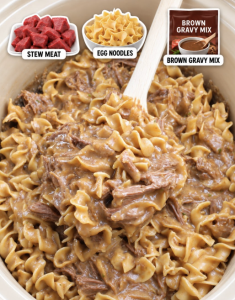
If you want your finished dish to look closer to the image you uploaded, wide egg noodles can be added or used as the serving base, creating an old-fashioned beef-and-noodles variation.
Old-Fashioned Beef Stew With Egg Noodles
For a variation similar to your image, prepare the beef until fork-tender, then shred some of the meat.
Cook 8 ounces wide egg noodles separately.
Stir them into the thickened beef gravy shortly before serving.
For an even quicker version, brown gravy mix can be used to reinforce the sauce, but for a full recipe article I prefer the homemade beef gravy because it gives you better control over sodium and flavor.
Make-Ahead Beef Stew
Beef stew is one of the best make-ahead dinners.
Prepare it completely.
Cool it properly.
Refrigerate overnight.
The next day, reheat it slowly.
The flavors often become even richer after resting.
Food Network also notes that beef stew is particularly good made ahead because the flavors deepen overnight.
Meal Prep Beef Stew
Divide the cooled stew into airtight meal-prep containers.
Pair each portion with:
- Bread
- Green beans
- Salad
- Egg noodles
Now you have ready-to-reheat lunches or dinners.
How to Store Beef Stew
Transfer leftovers into shallow containers and refrigerate promptly.
USDA recommends using cooked soups and stews within 3–4 days in the refrigerator.
How to Reheat Beef Stew
Stovetop
Place the stew in a saucepan.
Add a splash of broth if it has become too thick.
Heat over medium-low until thoroughly hot.
Microwave
Place one serving in a microwave-safe bowl.
Cover loosely.
Heat until hot, stirring partway through.
USDA recommends reheating leftovers to 165°F.
Can You Freeze Beef Stew?
Yes.
Beef stew freezes very well.
USDA’s storage guidance lists soups and stews at about 2–3 months for best freezer storage quality.
For best results:
- Cool the stew.
- Transfer into freezer-safe containers.
- Leave a little space for expansion.
- Freeze in family-size or individual portions.
One note: potatoes can become slightly softer after freezing.
If you’re intentionally making freezer meals, you can freeze the beef base and add freshly cooked potatoes when reheating.
Frequently Asked Questions
What is the best meat for old-fashioned beef stew?
Beef chuck is my first choice because long, slow cooking makes it tender and flavorful.
Do I have to brown the beef first?
No, but browning gives you deeper flavor.
Can I make beef stew without potatoes?
Absolutely.
Use carrots, mushrooms, turnips, or other vegetables.
Can I use frozen vegetables?
Yes.
Add peas, corn, or green beans near the end so they don’t become overly soft.
Can I use brown gravy mix?
Yes, especially for a quicker version.
Add one packet with the broth and reduce added salt.
Can I add egg noodles?
Yes.
Cook them separately and stir them in shortly before serving.
Why is my beef stew bland?
It may need:
- Salt
- Worcestershire sauce
- Black pepper
- More browning
- Longer simmering
- Tomato paste
Taste at the end before adjusting.
Can I make it in a Crockpot?
Yes.
Cook on LOW until the beef is fork-tender.
Can I make it ahead?
Yes.
It’s actually an excellent make-ahead dinner.
Easy Old-Fashioned Beef Stew Recipe
Prep Time: 20 minutes
Cook Time: 2 hours 30 minutes
Total Time: About 2 hours 50 minutes
Servings: 6–8
Ingredients
- 2½ pounds beef chuck, cubed
- 1½ teaspoons salt
- ½ teaspoon black pepper
- ¼ cup flour
- 2 tablespoons olive oil
- 1 large onion, chopped
- 3 carrots, chopped
- 3 celery stalks, sliced
- 1½ pounds potatoes, cubed
- 4 garlic cloves, minced
- 4 cups beef broth
- 2 tablespoons tomato paste
- 1 tablespoon Worcestershire sauce
- 1 teaspoon thyme
- ½ teaspoon rosemary
- 1 teaspoon smoked paprika
- 2 bay leaves
- 1 cup frozen peas
Instructions
- Pat beef dry and season with salt and pepper.
- Toss with flour.
- Heat oil in a Dutch oven.
- Brown beef in batches and transfer to a plate.
- Cook onion and celery for 4–5 minutes.
- Add garlic and cook for 30 seconds.
- Stir in tomato paste and cook 1–2 minutes.
- Add a little broth and scrape browned bits from the pot.
- Add remaining broth, Worcestershire sauce, herbs, and bay leaves.
- Return beef to the pot.
- Cover and simmer gently for 1½ hours.
- Add potatoes and carrots.
- Cook another 40–50 minutes, until beef and vegetables are tender.
- Add peas during the final 5 minutes.
- Thicken with cornstarch slurry if desired.
- Remove bay leaves.
- Rest for 10 minutes.
- Serve hot.
Delicious Variations
Beef and Noodles
Add wide egg noodles and extra gravy.
Mushroom Beef Stew
Add 8 ounces sliced mushrooms.
Slow Cooker Beef Stew
Cook everything low and slow in the Crockpot.
Beef Stew With Red Wine
Replace 1 cup broth with dry red wine.
Beef and Barley Stew
Replace some potatoes with pearl barley.
Guinness-Style Beef Stew
Use stout for part of the cooking liquid.
Vegetable-Loaded Beef Stew
Add green beans, peas, corn, mushrooms, and parsnips.
Final Thoughts
Old-Fashioned Beef Stew is the kind of recipe that never really goes out of style.
Tender beef, potatoes, carrots, celery, onions, garlic, herbs, and rich gravy come together in one hearty pot that tastes like classic home cooking.
It’s filling enough for Sunday dinner, practical enough for meal prep, freezer-friendly, and perfect for cooler fall and winter weather.
And if you want the version to match your uploaded image more closely, serve the tender shredded beef and gravy with wide egg noodles for an old-fashioned beef-and-noodles twist.